Showing posts with label Etymology. Show all posts

3 November 2014

The revolutionary Mr Turner

The Fighting Téméraire

A reproduction of an oil painting hangs on a wall in this room. I am not knowledgeable about fine art and until reading a recent film review knew the artist only as J M W Turner. The review taught me his forenames – Joseph Mallord William. He was a brilliant revolutionary, hailed by some as the father of Impressionism.

Like “Baker” or “Smith”, his surname derives from a trade. Wood-turners fashioned chair-legs, banister spindles, etc., typically with a pole lathe, and were much employed in the beechwoods around High Wycombe in Buckinghamshire, supplying the furniture industry there.

But why should a turner be so called?

Skeat’s Concise Etymological Dictionary says that “turn” comes from the Old English tyrnan or turnian and is related to the Old High German turnen, to turn. It has been reinforced by the unrelated Latin word tornare, to turn in a lathe, from tornus, a lathe, derived from the Greek τόρνος, used for a tool to draw circles with, which in turn is allied to τορός, piercing, a word which is also the source of “torus” and its adjectival form, “toroid”. Via the Spanish tornar, which is also related to the Latin and hence the Greek, we get “tornado”. “Tort”, “torque”, “torsion”, “tortuous” are among the various offspring of τορός.

Turner’s surname, then, befits a revolutionary, but what about the origin of his forenames?

His father’s first name was William and his mother’s full name was Mary Mallord Marshall. Was “Mallord” a given name, or did she retain her maiden name and prefix it to her husband’s name? I don’t know, but I found trace of a Joseph Mallord, christened in London on 22 January 1695, who might have been her father – she was born in 1739.

“Mallord” is a rare surname. It may be an Anglo-Saxon form of “miller”, hence also a trade-name. Or it may be a corruption of “mallard”.

Anyhow, Turner settled in Chelsea. Rents were cheap and he wanted to be near the Thames. In the seventy or eighty years after his death Chelsea became well known for the number of artists living there. Mallord Street, on the far side of the King’s Road from his studio, was developed around the turn of the twentieth century and is presumably named in his honour.

I have a friend who lived in Mallord Street during the late 1960s and early 1970s. Once or twice back then, I wondered why the street was so named. Now I think I know, thanks to a chance reading of a movie review and the pleasing toroidality of a world in which everything is connected to everything else. Once you get round to it, of course.

18 August 2014

Whither Hither and Thither?

These three words, for a long time merely literary, have gone out of fashion altogether except in compound use (“hitherto”, “hither and thither”) or when the writer or speaker wishes to introduce a whimsical note (“whither Obama now?”). It is a shame, because their loss also deprives us of shades of meaning.

The modern replacement for “hither” is simply “here”, doing away with the sense of movement. Consider these quotations from the dictionary: “Come hither unto me” (1550, and by the way “come hither” is still, just about, used adjectivally to describe a coy, arch, or seductive look bestowed by a woman); “hyther tendeth al prudence and pollycy” (1538). I believe that “hither” is the intensive form of “here”. The command “bring him hither!” implies “from that place to this” more imperiously than “bring him here!”

Likewise, “thither” intensifies “there” and “whither” intensifies “where”.

“Here”, “there” and “where” are ancient words, as one might expect of such important tokens of meaning. “Here” and “there” are closely related: the latter probably grew out of the former, a pleasing idea since we always start from “here”, unless of course we are Irish and giving directional advice (“I wouldn’t be starting from here”). “Where”, however, comes to us through the interrogative Anglo Saxon form “hwár?”, which is a relative of “hwā?”, “who?”

“When”, “what”, “where”, “who”, “why”, “which” and “how” all begin with aspirants. This somehow suggests, to me at any rate, the state of ignorance. When we are puzzled or confounded by something we often exhale through partially pursed lips. Might the initial aspirant have arisen, in the very deepest past, from association with this? After all, words have to begin somewhere. If they are onomatopoeic (e.g. “crow”, “crash”, “whip”) their etymology is easy to explain, but the expression of abstract ideas is so subtle that there must originally have been some common ground, however tenuous.

One of our vital abilities is to take things for granted. Without it we would never get anything done. Yet sometimes it is instructive to stop and consider an aspect – any aspect – of life to which we have never before given much thought. These three words, passing from use, remind us of the mutability and great age of our language, that gigantic construction built from nothing but a need to understand the other fellow and in turn tell him what we think. English is more than a means of communication: it is a teeming city, continually being redeveloped, partially demolished, rebuilt, the product of millions of minds and sensibilities.

Below the ground, slowly becoming buried by new layers of construction, the archaeology is there for anyone who cares to dig.

16 February 2013

Woodruff


Under the beech trees which are so much a part of my local landscape, in April and May, woodruff reaches its best. This is a member of bedstraw family, Galium, with the specific name odoratum: the plant is rich in coumarin, which also gives scent to new-mown hay, sweet alison and the man orchid. Coumarin is toxic, with a bitter taste, and is an appetite-suppressant in mammals, which may explain why woodruff is one of the few plants to be found abundantly in the open understorey below beeches.

The living woodruff is almost scentless, the coumarin being released only as the foliage dries. The plant can remain fragrant for years and for centuries was used to sweeten the air in houses and churches; the dried leaves were placed among linen, in pillows and mattresses, between the pages of books, and even in the cases of pocket-watches.

The etymology of the second part of the name is not as obvious as I used to think. The Oxford English Dictionary says it comes from the Old English rofe or rife, “of unknown meaning”; this word can denote a wheel or something that creeps or spreads. Skeat links it to the Old High German ruofe, meaning “sweet-smelling”.

The name occurs in the poem “Springtime” (1310):

A-way is huere wynter wo, when woderove springeth

(Away is their winter woe, when woodruff springs)


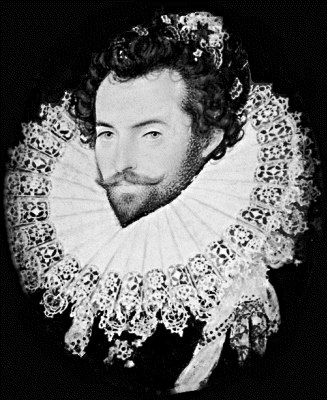
It’s only by coincidence, then, that the plant, like Sir Walter Raleigh, wears a ruff. As a schoolboy I assumed otherwise. And although I studied the flowers and stem and leaves under a hand-lens, I knew almost nothing of substance about the woodruff. This state of ignorance continues today, just as I am still substantially ignorant about all living things: their evolution, genetics and biochemistry, and the subtle tactics and strategies each has adopted to defend itself from parasites and predators, to preserve, replicate and spread its DNA. That such processes culminate in something we find beautiful is just as much a mystery.

All I really know is that I am very glad to see the carpets of woodruff in spring, and when I see them I know my winter woe is away for sure.

5 February 2013

Ratio and Oratio

According to Skeat, the Anglo-Saxon word word is derived from the Indo-Germanic root wer, “to speak”. It is cognate with the Dutch woord, the Icelandic orð, the Danish and Swedish ord, the German wort and the Meso-Gothic waurd. He compares it with the Lithuanian wardas, “a name” and the Latin verbum, “a word” – literally “a thing spoken”.

All these forms retain the original ur sound, which seems fitting, because “ur” is one of the most basic productions of the human voice. It is nice to think that “ur”, with its intensifying “w”, was one of the earliest terms agreed upon by those who named the animals.

Compare our word with the Greek λόγος (logos), which is defined in Liddell and Scott’s Greek-English Lexicon as “(A) the word or outward form by which the inward thought is made known;” and, giving us a glimpse of the Hellenic mind, “(B) the inward thought or reason itself; so that λόγος comprehends both the Latin ratio and oratio.”

Among the definitions of ratio in Cassell’s Latin Dictionary is “the faculty of mind which calculates and plans, the reason”; the primary meaning is “a reckoning, an account, computation, calculation”. Oratio simply means “speaking, speech, language”, and we may infer that it proceeds both in concept and etymologically from ratio.

To the Greeks reason and speech were inseparable, which helps to illuminate the glories of their language and civilization. However, to the northern βαρβαροι (barbarians), who were probably so called because of their unintelligible utterances (“baa-baa-baa”), the ur came first.

Speech and reason are like the chicken and egg. In the evolution of the human brain each gave rise to the other. The more precise and logical (those Greeks again!) one’s mental language, the more precise and logical, the more reasoned will be one’s conduct. That is why precision in language matters. At our peril we fail to teach our children syntax and spelling; relativists fail to expose them to the glories of our own language, and with every failure of teaching a little of our civilization dies.

That’s quite enough polemic (πόλεμος, a battle). This post is about the word that underlies our classification of the world: without agreeing among us what a word means, there can be no communication, and before doing that we need a word for “word”.
     “There’s glory for you!”
     “I don’t know what you mean by ‘glory’,” Alice said.
     Humpty Dumpty smiled contemptuously. “Of course you don’t – till I tell you. I meant ‘there’s a nice knock-down argument for you!’”
     “But ‘glory’ doesn't mean ‘a nice knock-down argument’,” Alice objected.
     “When I use a word," Humpty Dumpty said, in rather a scornful tone, “it means just what I choose it to mean – neither more nor less.”
     “The question is,” said Alice, “whether you can make words mean so many different things.”
     “The question is,” said Humpty Dumpty, “which is to be master – that’s all.”
In its original Greek, St John’s gospel begins:

Ἐν ἀρχῇ ἦν ὁ Λόγος, καὶ ὁ Λόγος ἦν πρὸς τὸν Θεόν, καὶ Θεός ἦν ὁ Λόγος.

In the Vulgate:

In principio erat Verbum et Verbum erat apud Deum et Deus erat Verbum.

In the King James translation:

In the beginning was the Word, and the Word was with God, and the Word was God.

In the Chalcedonian creed, Christ is the very Λόγος itself, the essence of reason. Without wishing to offend, I would point out that this is an early, and very powerful, attempt to hijack language for religious or political ends. The technique has been used more recently and to great effect by disciples of the Frankfurt School. By making some words taboo, they try to make the thought taboo as well. This exchange between ratio and oratio was perfectly understood by George Orwell; his Newspeak (in Nineteen Eighty-four) predicts the rise of political correctness.

To resist the hijackers we first have know where a word comes from. Etymology is the study of the origins of words and how one word begets or influences another. For a writer it is both fascinating and fundamental. One of my favourite books (acquired second-hand and inscribed: “Margaret with bestest love from R. Xmastide : 1915”) is A Concise Etymological Dictionary of the English Language by Walter Skeat. It is a treasure-trove of revelation and connection. We see the way words can subtly but innocently change their meaning over the years: the principle of Chinese Whispers is at work every time we communicate with our fellows.

Though our language is imprecise, it is the best we have. The more exact we can be with it the more clearly we will understand one another and the better we will get along. This is an old argument, but it bears repeating every day. It is too easy to become a Humpty Dumpty; etymology is one antidote, and to begin this occasional series of etymological reflections I thought it proper to start with the Word itself.